Trump plans generic drug tariffs from 2028 with two-year delay testing U.S. onshoring push

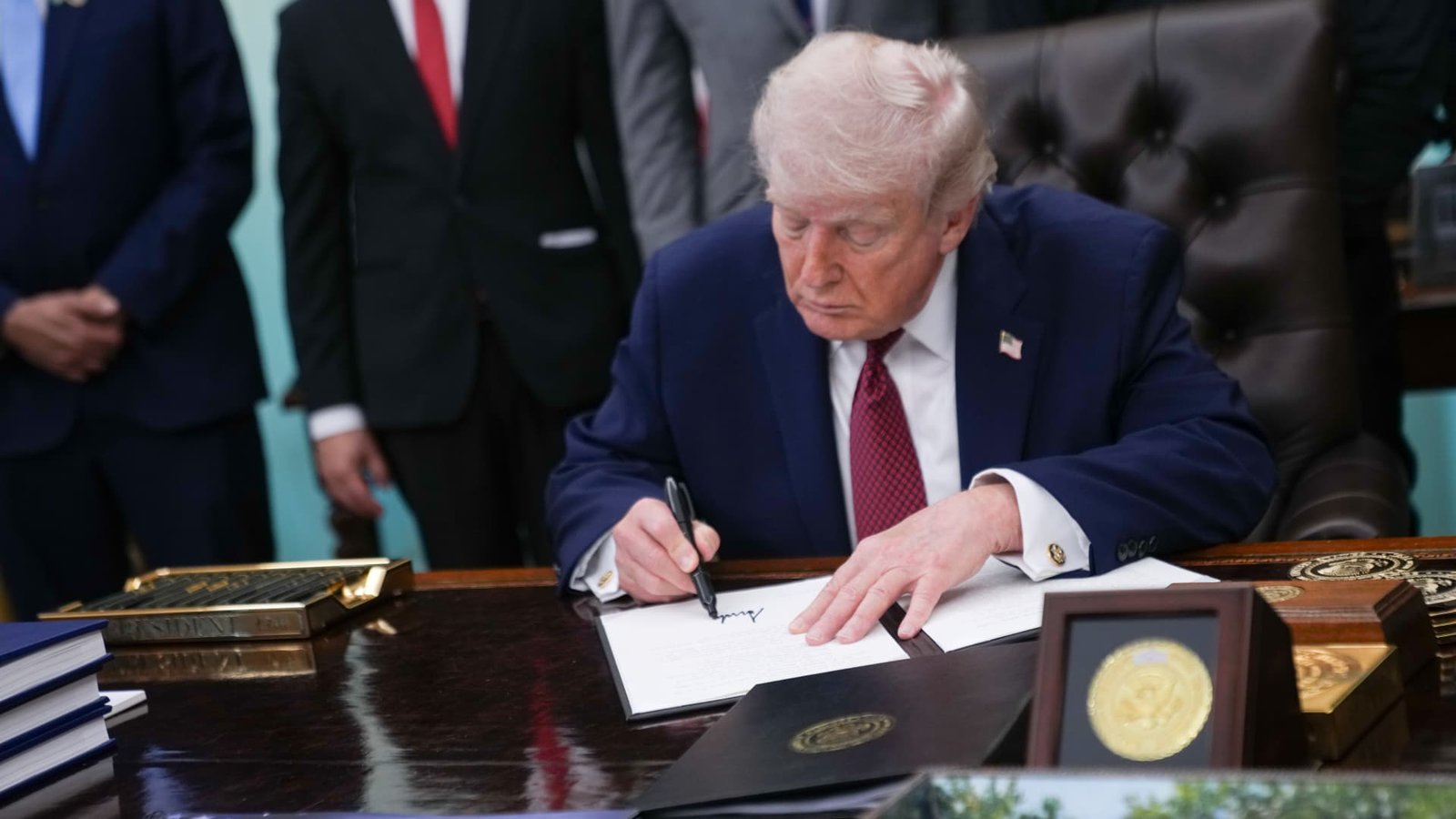
U.S. President Donald Trump signs an executive order on researching the effects of psychedelic drugs in medical treatment for veterans, on Saturday, April 18, 2026 in the Oval Office at the White House in Washington, D.C.
The Washington Post | The Washington Post | Getty Images
President Donald Trump said generic drugs imported into the U.S. will face zero tariffs for two years starting August 1, before a 100% levy takes effect in August 2028 and rises to 200% a year later.
The phased schedule is intended to push generic drugmakers to move production onshore, Trump said in a social media post Tuesday, describing the escalation as “a penalty” for companies that don’t build plants and facilities in the U.S. within the grace period.
Nearly all prescriptions in the U.S. are filled with generic drugs that often come via overseas manufacturing and involve complex ownership structures, according to Legis1, a congressional intelligence platform.
The latest tariff salvo underscored Trump’s goal to reshore low-cost drug production to the U.S., said Deborah Elms, head of trade policy at the Hinrich Foundation.
But building pharmaceutical production in the U.S. is complex and costly — and nearly all the inputs would still come from abroad, Elms said, adding that “I am not sure that even a potential 200% tariff will change the fundamental math.”
Trump has used tariff threats and his most-favored-nation pricing policy to press drugmakers into charging Americans no more than patients in other high-income countries.
Tariffs on patented and branded drugs will remain unchanged, Trump said. The president imposed a 100% levy on patented pharmaceutical products and ingredients under Section 232 on April 2, while exempting generic drugs, biosimilars, and related ingredients. Larger drugmakers were given 120 days before the 100% tariff rate goes into effect, and smaller drugmakers, which rely on contract manufacturers, had 180 days before that rate hits.
More than a dozen major drugmakers, including Eli Lilly, Pfizer and Novo Nordisk, have struck deals with Trump to lower the prices of new and existing medicines. Those agreements are part of the president’s “most favored nation” policy, which ties U.S. drug prices to cheaper ones abroad, and exempts the companies from tariffs for three years.
The stakes are high for India, as the country’s pharmaceutical companies supply nearly 50% of all generic medicines consumed in America. The U.S. accounts for about a third of India’s pharma exports, mostly cheaper versions of popular drugs, annually. Chinese firms dominate the upstream supply of active pharmaceutical ingredients, such as amoxicillin and heparin.
The announcement substantially raises long-term risk for Indian drugmakers even with the two-year reprieve, according to Arpit Chaturvedi, South Asia advisor at Teneo. The pharmaceutical sector is among the country’s largest net export earners, and full implementation of Trump’s stated tariffs would deal a serious blow to India’s trade balance, Chaturvedi said.
Meanwhile, Washington will find it hard to simply displace India as a supplier, he said.
With margins on many ordinary generics already razor-thin, some manufacturers may exit specific products entirely if wholesalers refuse to absorb or pass through the added cost, making the particular products no longer “commercially viable,” he said.
The two-year runway, however, offers a critical negotiating window for New Delhi to push for tariff relief in its ongoing talks with the U.S., including by pledging corporate investment commitments in America, he said.
With the stated tariffs not biting until 2028 — an election year in the U.S.— “New Delhi would hope that this rule will not be implemented,” Chaturvedi said.
In the meantime, he expects Indian drugmakers to lobby Washington for exemptions, pursue approvals from the Food and Drug Administration, contract-manufacturing deals, and diversify into new markets.
This article was originally published by a Cnbc.com. Read the Original article here. .