
The UK cuts energy bills, taxes banks and boosts defense in high-stakes budget

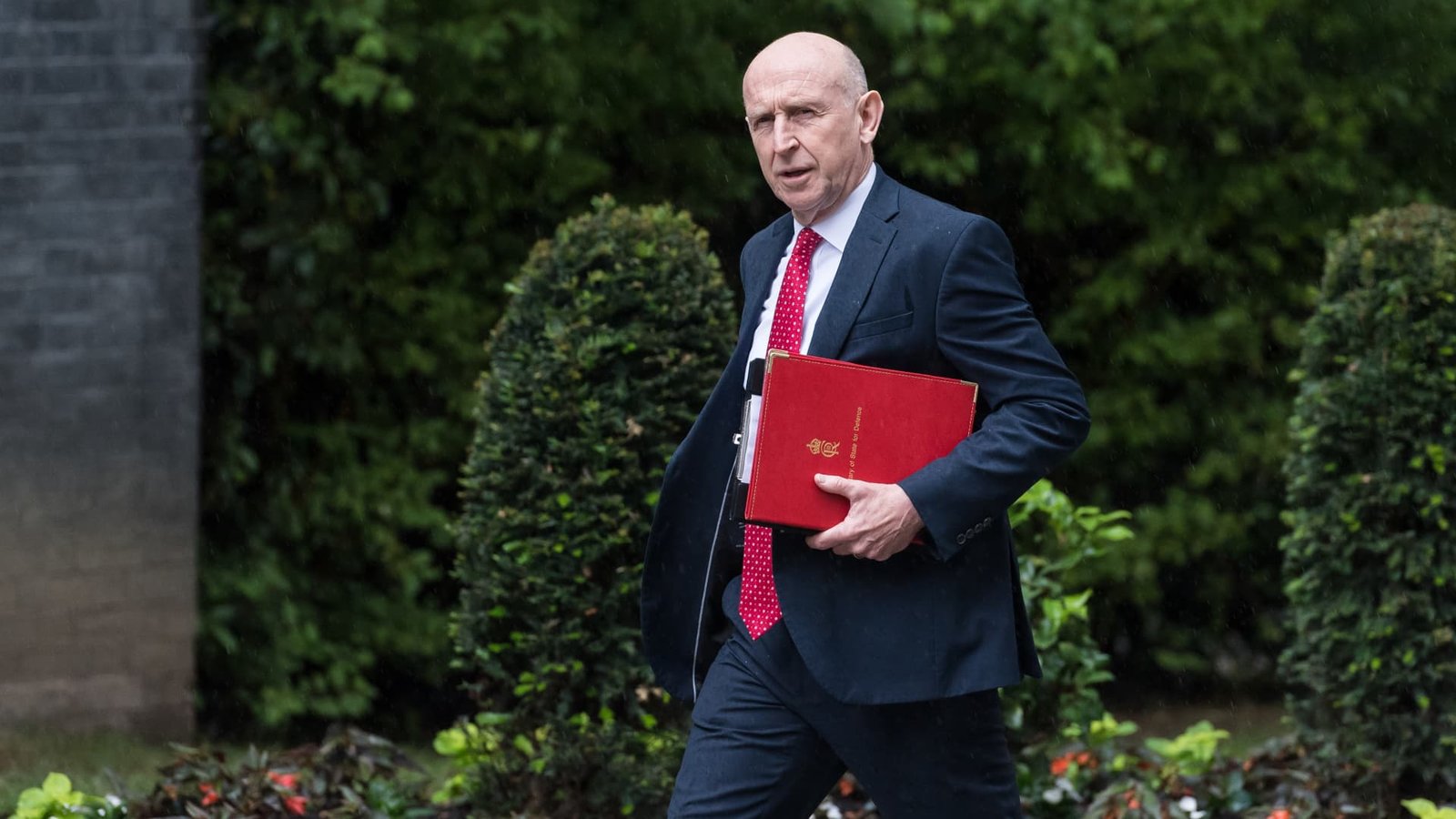
Secretary of State for Defence John Healey arrives in Downing Street to attend the weekly Cabinet meeting in London, United Kingdom on June 02, 2026.
Wiktor Szymanowicz | Future Publishing | Getty Images
The U.K.’s finance minister John Healey delivered his first fiscal budget on Wednesday, announcing funding for defense, AI initiatives and measures designed to ease cost-of-living pressures.
The Autumn Budget included dozens of measures aimed largely at easing rising costs for Britain’s population, but Healey was careful not to risk the ire of markets, which responded broadly positively to his plans.
Cost-of-living crisis
As a net energy importer, the U.K. is vulnerable to external energy shocks.
Inflation has risen sharply this year, with surging fuel costs driving the annual inflation rate to 3.5% in September. Markets expect the Bank of England to hike interest rates next month, while government borrowing costs have risen sharply this year.
The U.K. government, led by Prime Minister Andy Burnham, had promised to alleviate economic pressures ahead of the budget.
On Wednesday, Healey said he would deliver “breathing space” for families, saying the country needs “radical change on energy,” and citing the inflationary impact of the U.S.-Iran war — a conflict he said “we did not want.”
His measures included the removal of standing charges on household gas heating bills, the extension of a tax break on electricity for millions of households through July 2027, and £100 ($133) checks for those living in the four lowest local housing tax bands. This will cost £2.6 billion.
Healey said tariffs would be removed on over 100 grocery products, a policy announced before the budget was officially unveiled. Small business relief from business rates — a tax on commercial premises — would be extended to include more companies in the hospitality, retail and leisure sectors. Other measures included £15 million to provide books for children, funding aimed at reducing homelessness and support for people to purchase their first home.
The U.K.’s minimum wage will rise by 3.9%, while a planned cut to tax-free savings thresholds was canceled.
But Healey also pledged to bring down the welfare bill, pointing to reforms to pensions and sickness benefits.
But he said he would not “write off a million young people [or] see disabled people suffer the indignities of a system that has been found ‘not fit for purpose.'”
The U.K.’s welfare bill, which reached 10.7% of UK GDP in 2024/25, has been a contentious issue in recent years. Previous finance minister Rachel Reeves watered down her own plans to cut welfare spending after a rebellion from lawmakers within her party.
AI in focus
Healey also announced investments in developing — and regulating — the U.K.’s artificial intelligence industry.
“Nowhere is the necessary role for the state clearer than in artificial intelligence,” he said, as he announced hundreds of millions of pounds in funding for AI security and sovereignty.
He announced a “covenant” for data centers in the country, with “strict tests” they must meet: “To invest in local communities, create local jobs and protect local water supplies. In return, critical data centers will get the grid connections they need, and, where necessary, be allowed to build onsite generation while they wait,” Healey said.
Healey also announced tax breaks for founders, including a reduced capital gains tax rate on gains of up to £10 million.
Cash would also be injected into various regional hubs, Healey said, to “unleash Britain’s innovation power.”
Defense spending
The budget also included £10 billion of additional economic and military support for Ukraine.
“Today we send a clear message to Moscow: Britain will stand with Ukraine for as long as it takes,” he said. More funding would go to defense, he added, to ensure the country can meet its NATO spending commitments.
“At the Spending Review next year, I confirm that I will set out the details of how we will meet our NATO commitment to spend 3.5% of GDP on defense by 2035, with a target date for 3% in 2030,” he said. “In this new era of threat, the demands on U.K. defense are rising.”
Fiscal rules maintained
Healey said his spending plans complied with the so-called fiscal rules set by his predecessor. Under those rules, the government’s day-to-day spending must be funded by tax revenues rather than borrowing, and debt must be declining as a share of GDP.
Alongside the budget announcements on Wednesday, the U.K.’s Office for Budget Responsibility forecast that the government would have £15 billion of fiscal headroom by the 2029/30 financial year.
“Despite global challenges, this Budget puts us on track to eliminate the current budget deficit and get Britain’s finances into the black within three years,” Healey told lawmakers in parliament before unveiling the full details of his fiscal shake-up.
The OBR forecast on Wednesday that national debt as a share of GDP would rise slightly to 83.8% next year, before steadily declining until it reaches 81.7% of GDP by the 2032 financial year. It also raised its growth forecast for the U.K., saying it now expects the economy to expand by 1.2% this year, 1% in 2027 and 1.6% in 2028.
Yields on U.K. government bonds, known as gilts, fell as Healey spoke. By 1:50 p.m. in London (9.50 a.m. ET), the yield on the benchmark 10-year gilt was 2 basis points lower at 5.323%.
Sterling was marginally lower against the U.S. dollar, and 0.2% lower versus the euro.
Banks foot the bill
Healey said Wednesday that he would raise revenue “from those who can afford to pay.”
“No tax rises on wages or dividends,” he said. “Cutting taxes for millions of families and businesses.”
Banks, gambling businesses and vape shops would be taxed to help pay for the new measures, he announced.
Healey — who earlier this month called Britain’s banks the “jewel” in the country’s economic crown — said the bank surcharge would now be raised by 3%, bringing it to 6%.
Healey said the U.K.’s “world-leading banks” make a “huge contribution” to the country — and he was now asking them to fund the “breathing space” for Britain’s households.
The temporary measure will be implemented in January and end 15 months later.
The scale of tax hikes was not as severe as some in the sector had feared, and shares in London-listed lenders moved higher on the announcement.
Shares in U.K. banks rose. Barclays were last seen 3.3% higher, while Lloyds Banking Group rose more than 2.6%. NatWest Group was up 2.5%.
JPMorgan Chase, whose CEO Jamie Dimon joined bankers lobbying against additional U.K. taxes last month, said in a statement that “to single out this industry for additional taxes again, one of the UK’s biggest generators of growth and jobs, lacks principle.”
“It also overlooks that the banking industry operates in a highly competitive global marketplace,” a company spokesperson said.
Dimon has previously suggested it may rethink the multibillion-dollar buildout of its new headquarters in London’s Canary Wharf financial district if the government is “hostile” to banks.
The company said on Wednesday that it is “committed” to the U.K.
— CNBC’s Hugh Leask contributed to this report.
This article was originally published by a Cnbc.com. Read the Original article here. .



