
The Agentic AI Tax: Who Pays and Who Profits

Editor’s note: “The Agentic AI Tax: Who Pays and Who Profits” was previously published in May 2026 with the title, “Why the Smartest AI Investors Are Ignoring the Model Race.” It has since been updated to include the most relevant information available.
The dot-com era taught investors a valuable lesson.
Betting on the winning website was hard. Owning the infrastructure every website needed was easier.
Amazon (AMZN) survived. Pets.com disappeared. AOL rose, then faded. Dozens of internet companies burned through hundreds of millions of dollars and left investors with nothing. But Cisco (CSCO) made money through it all because every byte of internet traffic needed its routers and switches to move across the web.
The stock rose about 3,400% in five years.
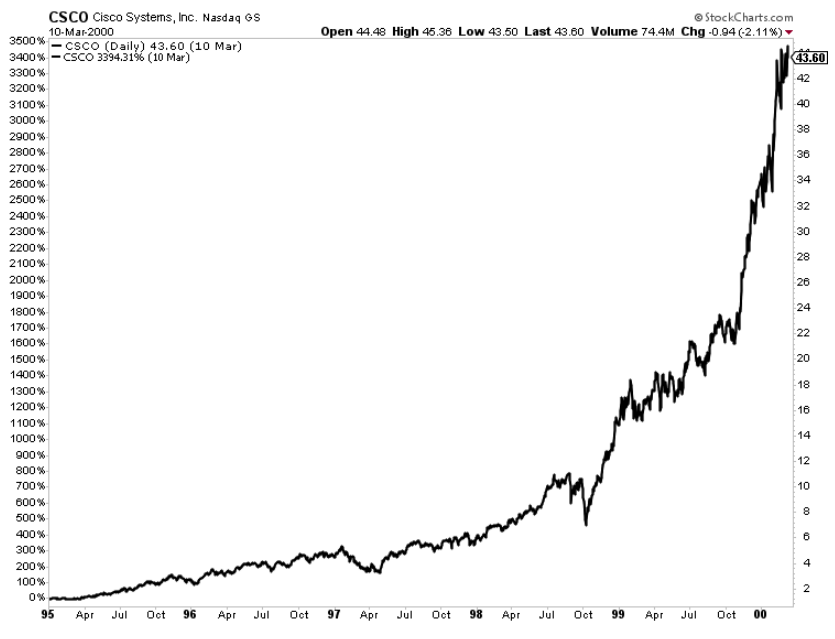
Cisco didn’t have to pick the winning website because it sold the equipment that made the internet work.
The same dynamic is starting to play out in AI right now — but with one important twist.
The market already understands that AI needs infrastructure. What it still underestimates is how much more infrastructure AI consumes when it stops answering questions and starts completing work.
That is the next phase of the boom. And it creates what we call the Invisible AI Tax.
From Chatbots to Agents: Why the Infrastructure Bill Just Got 20x Bigger
A chatbot answers a prompt. An agent pursues a goal.
Those two consume very different amounts of infrastructure.
A simple chatbot exchange might process a few hundred tokens — the chunks of text a model reads and generates to complete a response. You ask a question, the model answers, and the interaction ends.
But an agentic workflow is different.
Tell a chatbot, “Write me a marketing plan,” and it gives you a response. Tell an agent, “Grow our market share by 15% this quarter,” and it starts working. It researches competitors, pulls internal data, drafts campaigns, tests messages, coordinates with other agents, revises, reports, and keeps going until the task is done.
What begins as a few hundred tokens can become tens of thousands as the system plans, executes, checks its own work, calls tools, communicates with databases, and iterates. That is the part most investors still have not fully processed.
AI agents can consume 20 to 30 times more physical infrastructure per task than a simple chatbot exchange.
Not 20% more — 20 to 30 times more.
More compute, more memory, more networking, more cooling, more power, more data center capacity.
And this is not some distant scenario. More than half of major enterprises already have AI agents running in production, and adoption is projected to rise sharply over the next year.
That means the AI boom is moving from experimentation to persistent infrastructure consumption.
The question is where, exactly, all that additional demand lands.
The Six Tollbooths Every Agentic AI Workload Must Pay
Think of the AI economy as a superhighway.
Every model query and agentic task has to travel across physical infrastructure. And along the way, it passes through six tollbooths: compute, memory, networking, thermal management, power, and real estate.
We’ve covered parts of this system before — the custom silicon shift, the data center networking bottleneck, and the physical limits around power and cooling. But this piece is about the next layer of the thesis: agents consume that infrastructure — and then some.
Compute is the most visible. Every AI model needs specialized chips to run — GPUs, custom accelerators, and inference chips built to handle enormous amounts of parallel processing. Nvidia still sits at the center of this layer, but custom silicon designers are increasingly important as hyperscalers build cheaper, optimized chips for their own AI workloads.
Memory is the next toll. Agents need context; to remember what they have done, what they are doing, and what comes next. The longer and more complex the task, the larger the context window — and the more high-performance memory the system needs to keep everything moving.
Networking may be the least appreciated tollbooth. Agents communicate with databases, tools, APIs, external services, and other agents. That traffic has to move between chips, racks, servers, and data centers at extraordinary speed. As agentic AI spreads, switches, interconnects, cables, optics, and networking silicon become even more important.
Then comes thermal management. Dense AI racks generate extreme heat. And because agentic workloads run longer and more persistently than simple chatbot requests, thermal production only rises. Liquid cooling, coolant distribution units, and precision thermal systems are now core infrastructure for keeping AI systems online.
Power is the fifth toll. AI agents do not sleep. They can run constantly, across thousands of enterprises, performing tasks in the background around the clock. That persistence requires grid upgrades, onsite power, long-term electricity contracts, and reliable baseload energy.
Finally, there is real estate. Every server, chip, cooling unit, power system, and networking rack has to live somewhere. That means specialized data center buildings with access to land, electricity, cooling, and fiber.
A chatbot taps all six. An agent pounds them.
That is the Invisible AI Tax. And the bigger the agent economy gets, the more every transaction pays it.
The Numbers Are Already Showing Up In Earnings
The tollbooths are already collecting.
At Google Cloud Next, CEO Sundar Pichai disclosed that Google’s AI models are processing more than 16 billion tokens per minute. That number was up about 60% from the prior quarter. And hundreds of Google customers each consumed more than one trillion tokens over the past year.
One trillion tokens each.
Nvidia CEO Jensen Huang has said the amount of inference compute needed is already 100 times more than initially expected — and that this is just the beginning.
Hyperscaler AI infrastructure spending is exploding. AI-related memory demand is surging. Networking targets are moving higher. Cooling backlogs are expanding. Power companies are signing long-term agreements with cloud giants. Data center landlords are leasing capacity as fast as they can build it.
The tollbooth companies are not hoping this demand shows up. They are reporting it quarter after quarter.
And the agentic multiplier is only starting to hit.
What This Means for Agentic AI Stocks
The AI model war will produce winners and losers.
OpenAI. Google. Anthropic. Meta. xAI. Chinese competitors. Open-source models. Proprietary models. Some will win. Some will fade.
Trying to pick the ultimate winner is hard, and even the smartest technology investors can get it wrong.
But whichever model wins, the infrastructure bill stays the same.
Every model needs compute; every agent needs memory; every workflow needs networking; every rack needs cooling; every data center needs power.
That is why the Invisible AI Tax matters so much.
The best-positioned infrastructure companies get paid as AI usage intensifies.
And agents are the multiplier.
The first phase of this boom was about proving AI worked. The next is about paying to run it at scale.
That is where the tollbooth companies sit.
The Real Risks (This Isn’t a Free Lunch)
None of this makes these stocks risk-free.
Many already trade at premium valuations. A pause in hyperscaler capex would hit the group as a whole. Some companies have heavy customer concentration. And some emerging infrastructure plays — especially in next-generation power, cooling, and optical networking — still carry real execution risk.
But those are timing and sizing risks. They do not break the core thesis.
The shift from chatbots to agents increases infrastructure consumption per task. And a narrow set of companies collects revenue as that consumption rises.
The Infrastructure Always Gets Paid
Most investors are watching the AI race and trying to pick the winner. That is the wrong game.
The winner of a race still has to run the road. And the AI road has a toll.
The companies collecting that toll get paid regardless of who crosses the finish line first.
Unless you’re early enough that the road itself hasn’t even been priced in yet.
The investors who made the most money from the dot-com era didn’t wait for Cisco to become obvious. The same opportunity exists right now — hiding in plain sight, underneath two IPOs that will dominate every financial headline the moment they arrive.
Here’s where I’d look before that happens.