How to Read Japanese Candlestick Charts (Part II)

✅ Free Trial, Tradenet Trading Room: https://bit.ly/2YruEtX
✅ Free $10,000 Trading Challenge: https://bit.ly/3DVJ1XG
✅ “The Market Whisperer” Book, Free Part 1: https://bit.ly/2Vn5Hik
✅ Learn To Trade Stocks: https://bit.ly/2YyPnfC
✅ Learn To Trade Crypto: https://bit.ly/3h4jJgk
✅ Tradenet Plus: https://bit.ly/38HpHiK
Join Our Facebook Group: https://bit.ly/3BNyHPW
Follow My Social Media:
Instagram: https://bit.ly/3DTcr8X
Twitter: https://bit.ly/2WZK48y
Facebook Page: https://bit.ly/3DUs1kE
TikTok: https://bit.ly/3h7dOay
Twitch: https://bit.ly/3yOKZFC
Stocktwits: https://bit.ly/3zPi8SR
Refer A Friend, Get Rewarded: https://bit.ly/3kWn6XX
Visit Our Website: https://bit.ly/3zKY0Br
Contact Us: https://bit.ly/3h4kMNi
#StockMarket #Trading #DayTrading
How to Read Japanese Candlestick Charts (Part II):
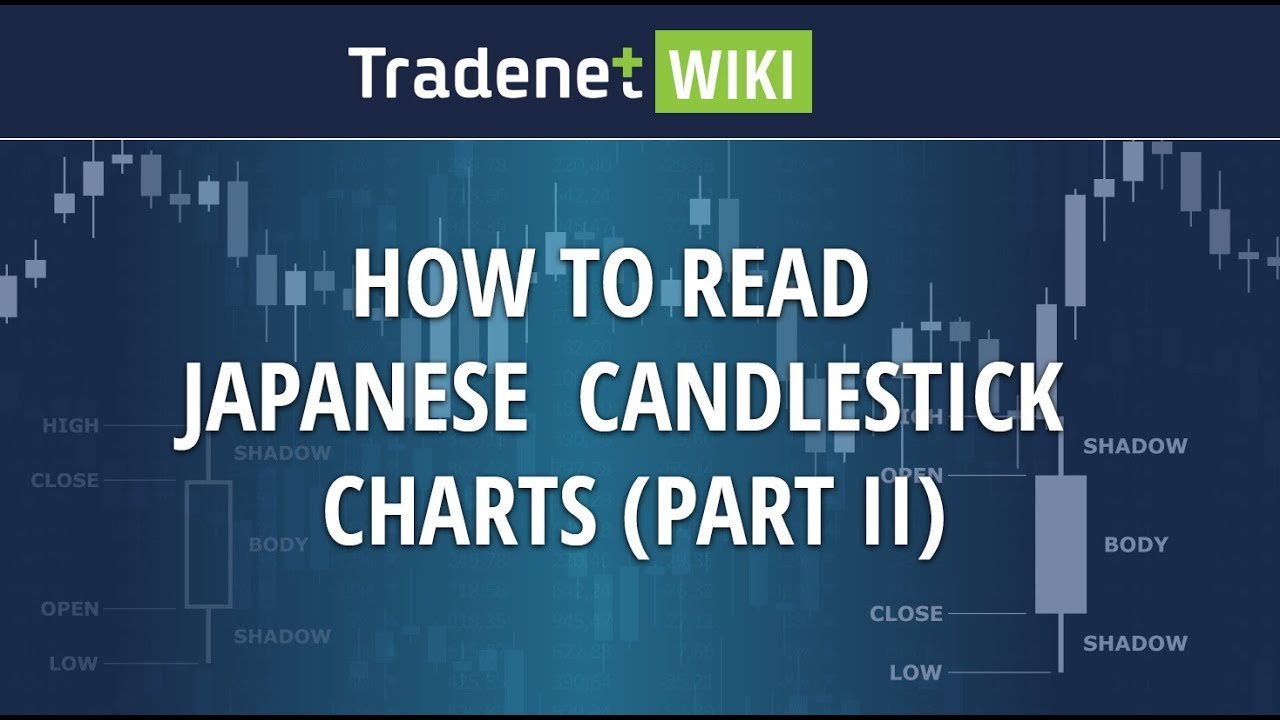
In Part I of the topic on how to read Japanese candlestick charts, you learned that all Japanese candlesticks have a “body,” and that most candlesticks also have “tails.” But how do these parts of a candle graphically represent a stock’s price movement?
How to Read Japanese Candlestick Showing Price Rise
In the Japanese candlestick image above, let’s assume that the candle represents one day of trading. To the left of the candle, we have a simple line chart tracing the stock’s behavior over the entire day. Looking at the line chart, we can see that the stock opens trade at a price of $20, drops to a low of $19.50, rises to a high of $21.20, and finally ends the day of trading with a close of $21.
Now let’s examine the Japanese candlestick itself. We see a clear (or white) body, which means that the price closed up for the day. The opening price is represented by the base of the candle body, the close is marked by the top of the body, and the topping and bottoming tails indicate the day’s high and low, respectively. In other words, this single Japanese candlestick has done a remarkable job of summarizing an entire day’s worth of data from the line chart.
How to Read Japanese Candlestick Showing Price Decline
Okay, let’s assume that the Japanese candlestick in the image above also represents one day of trading. Notice that the body is filled with black this time. Looking at the line chart to the left of the candle, we can immediately see a graphic representation of stock prices trending downward over a day of trading. The stock opens the day at $21, peaks with the day’s high of $21.20, drops to the day’s low of $19.50, and closes the day of trade at $20.
Returning to the Japanese candlestick, we see a black-filled body, which means that the price closed down for the day. Because the candle is black, we immediately understand that the opening price is represented by the top of the body, the closing price is marked by the bottom of the body, and that the two tails, topping and bottoming, show the day’s high and low
How to Read Japanese Candlestick Showing No Change in Price
When a stock’s open and closing prices are identical, the Japanese candlestick will not be green or red or any other color because its “body” will shrink to become nothing more than a horizontal line, as you can see in the image above. This Japanese candlestick is called a “doji,” and it indicates indecision: a perfect balance of power between buyers and sellers. In the line chart to the left of the candle, you can see that the opening and closing prices are the same: $20. The stock did move around, from a low of $19.50 to a high of $20.20, but, in the end, it closed with no change.
Japanese Candlesticks Light the Way for Day Traders
There are several reasons why Japanese candlestick charts are superior to bar charts and continue to be the method of choice for day traders:
• Japanese candlesticks have colored bodies, which allow traders to immediately identify whether the price rose or fell.
• Japanese candlestick charts have continued to evolve over time with new techniques that show additional data, thus adding a further dimension to the method.
• And finally, because most professionals have shifted to using the Japanese candlestick method, it is strongly recommended that you use the same tool. This lets you view the market in exactly the same way that the pros do, so that you can operate in exactly the same way.
Without a doubt, every day trader must learn how to read Japanese candlesticks. They will light the way for day traders who know how to use them effectively.
source