Homeowners insurance costs soar as insurers drop more customers: NAIC

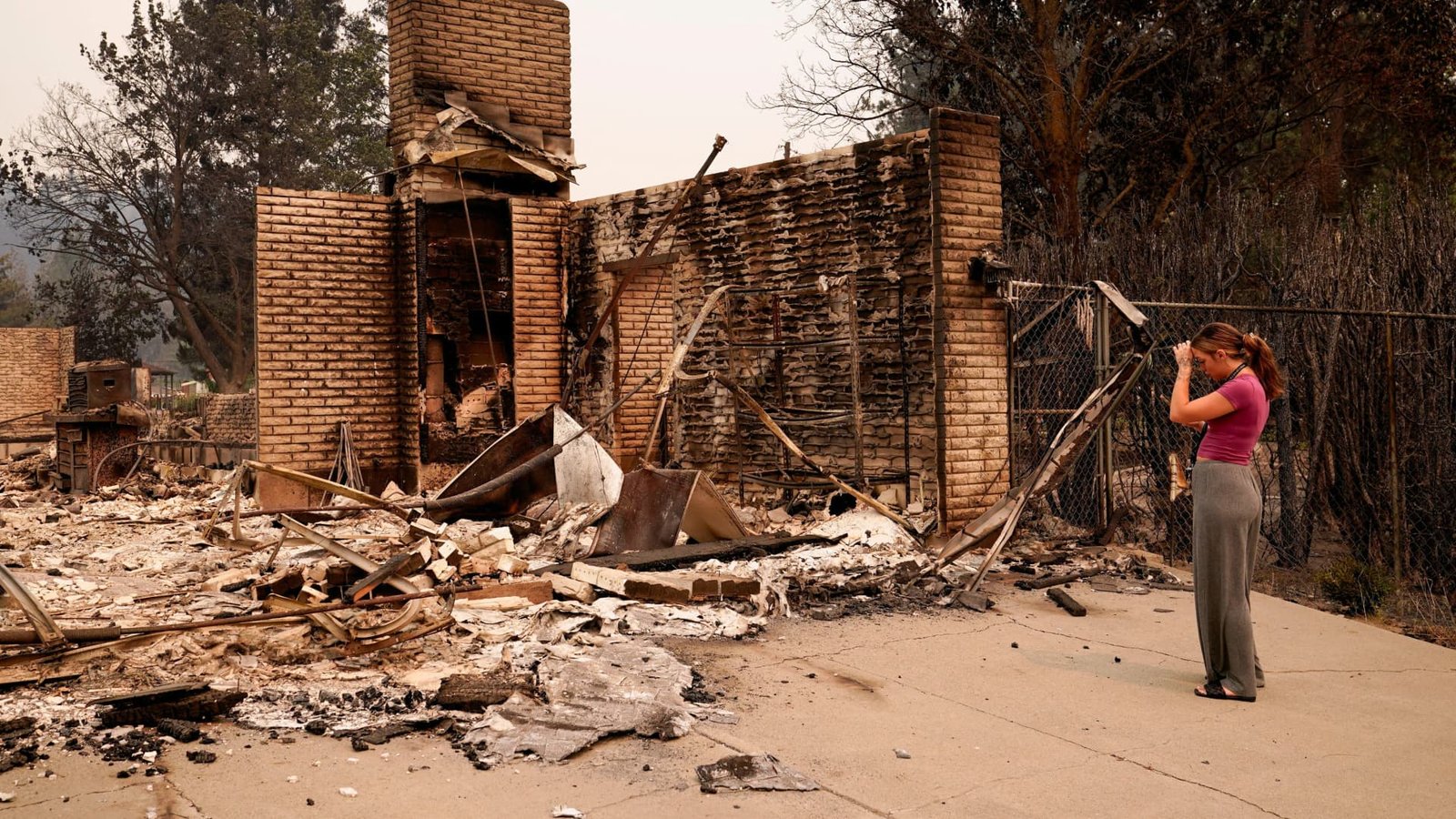
Ash Sollie stands in front of her grandparents’ home, where she previously lived, after it was destroyed by a wildfire, in Spokane, Washington, U.S., August 2, 2026.
David Ryder | Reuters
Homeowners insurance costs are swelling rapidly for consumers — and even for those able to pay, policies are getting harder to keep as insurers drop customers at a higher rate, according to a new industry report.
Average premiums for homeowners insurance rose faster than inflation across all major regions of the country from 2018 to 2024, according to a report released Wednesday by the National Association of Insurance Commissioners, a group that represents state insurance regulators.
Consumers saw their average premiums rise by 18% in the Northeast, 25% in the Midwest, 27% in the Southeast and 43% in the West over that seven-year period, even after accounting for inflation, according to the report, which broke out data across four regional zones.
Average premiums were highest in the Southeast, at $1,818 per year in 2024, while those in the Northeast were lowest at $1,396, NAIC said.
Premiums have risen another 7% since the beginning of 2025, according to the Bureau of Labor Statistics’ producer price index. The index doesn’t necessarily reflect consumers’ out-of-pocket costs, but provides a proxy for the movement of premiums over time, according to the National Association of Realtors.
The report, compiled with data from state insurance agencies, was the group’s first comprehensive data analysis of the homeowners insurance market in several years, NAIC officials said.
Climate change, rising home rebuilding costs and other factors have driven up financial risk for insurers, who are passing that financial burden on to consumers, at least in part, insurance experts said.
Meanwhile, the dynamic is straining homeowners amid a broader affordability crunch and a U.S. inflation rate that has been above policymakers’ target for more than five years.
People’s ability to afford a home is about 10% lower than it would otherwise be if insurance costs had remained stable since the late 1990s, according to NAR.
The expense disproportionately burdens low-income households, who are more likely to drop their coverage altogether — and put their house, often their largest financial asset, at risk if disaster strikes, said Peter Kochenburger, an insurance expert and a visiting professor of law at Southern University Law Center.
“It’s a big problem,” Kochenburger said of rising costs for consumers.
The NAIC analysis also showed that insurers are dropping customers at elevated rates, opting not to renew their policies when their terms expire. This generally happens when an insurer thinks the risk outweighs their profit potential, Kochenburger said.
Non-renewal rates per 1,000 in-force policies have increased across the country since 2018, by anywhere from 96% in the Southeast to 216% in the West, NAIC found. These non-renewals are those initiated by insurance companies.
There were 103 million homeowners insurance policies in force in the U.S. as of 2024, according to NAIC.
“The data tells the story of a homeowners insurance market that is overall operationally robust but nonetheless under pressure and exhibiting signs of stress,” the report’s co-authors, Jeffrey Czajkowski and Paula Harms, wrote.
“These trends support consumer sentiment that coverage is becoming more expensive and harder to find or keep in some places,” they wrote.
Why homeowners insurance costs are rising
Drone view of flooding after Hurricane Melissa made landfall in St Elizabeth, Jamaica, Oct. 29, 2025.
Maria Alejandra Cardona | Reuters
The report’s findings broadly echo those of other analyses in recent years.
The U.S. Treasury Department, for example, said in a report last year that average premiums per policy increased 8.7% faster than the rate of inflation from 2018 to 2022.
A poll conducted this year by the Pew Research Center, a nonpartisan research group, found that 42% of homeowners said their costs had gone up “a lot” in recent years.
Consumers generally buy homeowners insurance as a form of financial protection against unexpected physical damage to their house. Mortgage lenders also often require prospective homebuyers to buy such an insurance policy to secure a loan.
If homeowners insurance becomes too pricey for consumers, there could be a “cascading or domino effect” in the U.S. economy — for example, if fewer people choose to buy homes, Kochenburger said.
He said he thinks climate risk is the main driver of rising premiums.
Climate change has fueled an increase in the number — and intensity — of severe weather events like wildfires, hurricanes, droughts and floods.
The dynamic increases the likelihood that policyholders will need to file insurance claims and the odds that those claims will be for higher amounts, experts said.
The number of weather and climate disasters that caused more than $1 billion in damage increased more than fivefold from 2018 through 2022, compared with the 1980s, after adjusting for inflation, according to the Treasury Department.

“Catastrophic risk — these hurricanes, wildfire, severe convective storms, winter storms — these are events that are happening more and more frequently,” Czajkowski, director of the NAIC Center for Insurance Policy and Research, told CNBC in an interview. “And they’re impacting consumers.”
The elevated risk comes as the Trump administration has moved to dismantle the federal government’s efforts to fight climate change and reduce planet-warming greenhouse gas emissions.
While those natural disasters are more obvious in certain parts of the country — wildfires in the West and hurricanes in the Southeast, for example — weather-related risks are growing throughout the country, Kochenburger said.
“Hail is a significant source of property damage, and that occurs in a number of states that don’t have much coastal exposure,” he said, as an example.
An aerial view of hillside homes which burned in the Palisades Fire, near a home which is intact, as wildfires cause damage and loss through the LA region on January 15, 2025 in Malibu, California.
Mario Tama | Getty Images
However, factors beyond climate risk also contribute to higher insurance costs.
For example, inflation has increased the cost of repairing and rebuilding homes, thereby raising the amount insurers pay out when policyholders file an insurance claim, experts said.
Replacement costs for property and casualty-related losses increased by 45%, on average, between 2020 and 2023, according to the Treasury Department. Homeowners insurance is a type of property and casualty insurance.
The NAIC data may even undersell the scope of the issue.
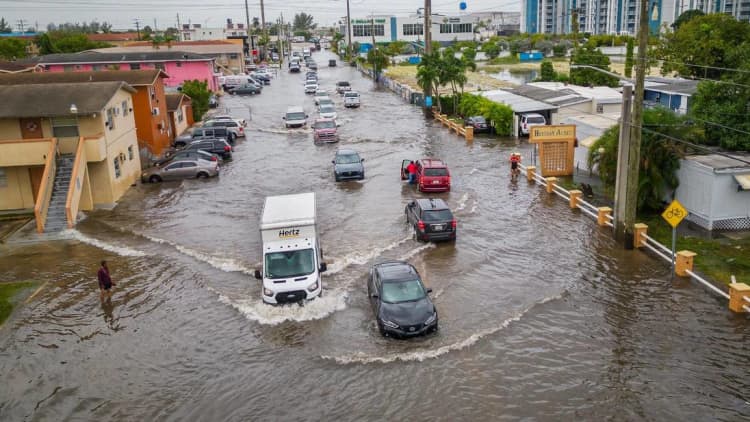
For one, since the report only breaks out costs by regional zones, it’s “likely” that there are smaller, local areas where premiums have risen much faster than a particular region, according to the NAIC report.
It’s also “quite possible” policyholders reduced coverage to blunt the impact of rising premiums, “which would likely show up in the data as a decrease or no change in premium,” it said.
Insurers have also generally made their policies less comprehensive over the years, perhaps by removing certain risks from a general homeowners policy or reducing the dollar limits for certain coverage, Kochenburger said.