
China’s goods surplus tops $1 trillion for a second year amid calls for Beijing to rebalance

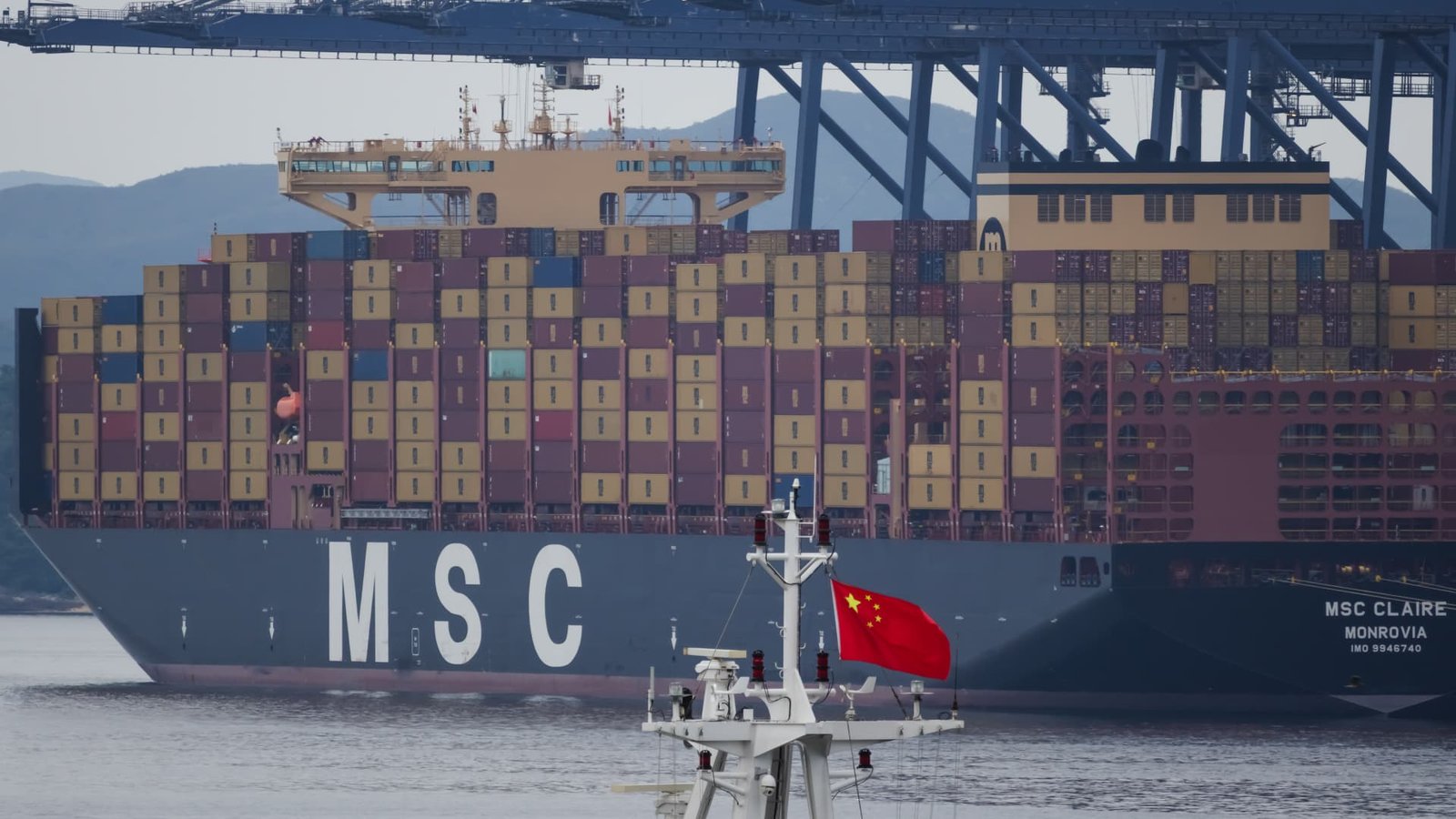
SHENZHEN, CHINA – AUGUST 30: A Chinese national flag flies from a vessel in front of the MSC Claire container ship berthed beneath gantry cranes at Yantian Port on August 30, 2026, in Shenzhen, Guangdong Province, China. China is set to release its latest official manufacturing purchasing managers’ index as investors assess the outlook for factory activity, domestic demand and exports amid persistent pressure on the world’s second-largest economy. (Photo by Cheng Xin/Getty Images)
Cheng Xin | Getty Images News | Getty Images
China’s trade surplus topped $1 trillion this year with two months to spare, at a time when partner countries have been raising concerns over Beijing’s exports that have been undercutting local industries.
For the 10 months through October, the surplus reached $1.04 trillion, compared with a record $1.2 trillion for the full year 2025, when it crossed the $1 trillion mark for the first time, customs data on Tuesday showed.
That milestone came as calls from trading partners have grown louder for Beijing to boost domestic demand and balance its economy. The International Monetary Fund has also repeatedly urged China to accelerate its pivot from relying on exports for growth toward a model powered by domestic consumption.
“China remains well on pace for a new record high for the trade surplus by year-end despite a miss in October,” said Lynn Song, chief economist for Greater China at ING Bank. Surplus growth in October slowed to a six-month low as imports surged, undershooting market estimates.
The surplus reflected global demand for Chinese-made AI hardware that has propped up an economy where consumers are still reluctant to spend.
Exports in October jumped by 35.2% from a year earlier, exceeding Reuters-polled economists’ expectations for a 33.5% jump. They had grown at 36.3% in September.
The strength in exports has allowed policymakers to continue relying on moderate support to meet the country’s annual growth target of 4.5%-5%, even as household consumption remains weak. Retail sales grew a modest 1.1% in September, underscoring the imbalance in the world’s second-largest economy.
Imports also soared, rising 41.6% last month, the strongest since May 2021 and sharply beating estimates for a 32% rise by analysts polled by Reuters.
Growth in imports was mainly driven by demand for tech-related goods, critical minerals such as copper, and energy supplies, including liquefied natural gas, oil and coal, said Tianchen Xu, senior economist at Economist Intelligence Unit. “Imports were still dominated by AI trade.”
Imports of high-tech products surged 72% in terms of value in October from a year ago, according to CNBC’s calculations of the official figures. Imports of crude oil, LNG and coal grew about 41%, 50% and 60%, respectively, by value.
Headwinds
As Chinese exports have been fueled by the AI trade, any sign of a slowdown in the global AI buildout risks denting the momentum and squeezing Chinese exporters’ margins. “Momentum looks to have slowed,” said Nguyen Hoang Nam, China economist at Capital Economics, estimating a seasonally adjusted 2% month-on-month fall in exports.
Export growth could slow to 8% in 2027 as favorable base effects fade and global AI investment moderates, said Yuanliu Hu, an analyst at Citi Research. Trade friction with the European Union and the U.S. truce expiring in January are adding to uncertainty, said Hu.
“Additional EU trade measures targeting China look plausible to us,” and the upcoming leaders’ meeting poses the next test for the country’s trade with the U.S. Presidents Xi Jinping and Donald Trump are set to meet for a third time this year at the APEC leaders’ summit in Shenzhen, China, next week.
China’s exports to the U.S. soared 32.9% in terms of value from a year earlier, while imports grew nearly 35%, making a surplus of $32.7 billion. The U.S.-bound shipment grew 12.1% this year as of October, partly thanks to last year’s low base when shipments plunged 20% on dramatic tariff hikes.
Washington and Beijing agreed in September to extend a broader trade truce by two months to January, along with a slew of other trade measures, including export-control waivers for certain critical minerals and special port fees for each other’s vessels.
The EU also reached an agreement with Beijing last month to limit the imports of Chinese hybrid vehicles over the next few years, as part of the effort to reduce its trade deficit with Beijing. China’s shipments to the bloc grew 24.4% while imports dropped more than 4% in October, widening the surplus to $33.4 billion.
But the auto import curbs, taking effect on Dec.1, would barely contain China’s export boom, according to analysts.
The cap of 350,000 imported cars per year is above the 300,000 hybrids that China exported to Europe last year, though well below the 800,000 units in annualized pace over the last three months, according to Brad Setser, a senior fellow at the Council on Foreign Relations.
“Europe still is a long way from a coherent trade and industrial policy with respect to autos, let alone a coherent economic policy towards overall trade with China,” said Setser, a former U.S. Treasury official who specializes in global trade and capital flows.
Correction: This story has been updated to reflect that the official data was released on Tuesday.
This article was originally published by a Cnbc.com. Read the Original article here. .