Iran war upends spring housing

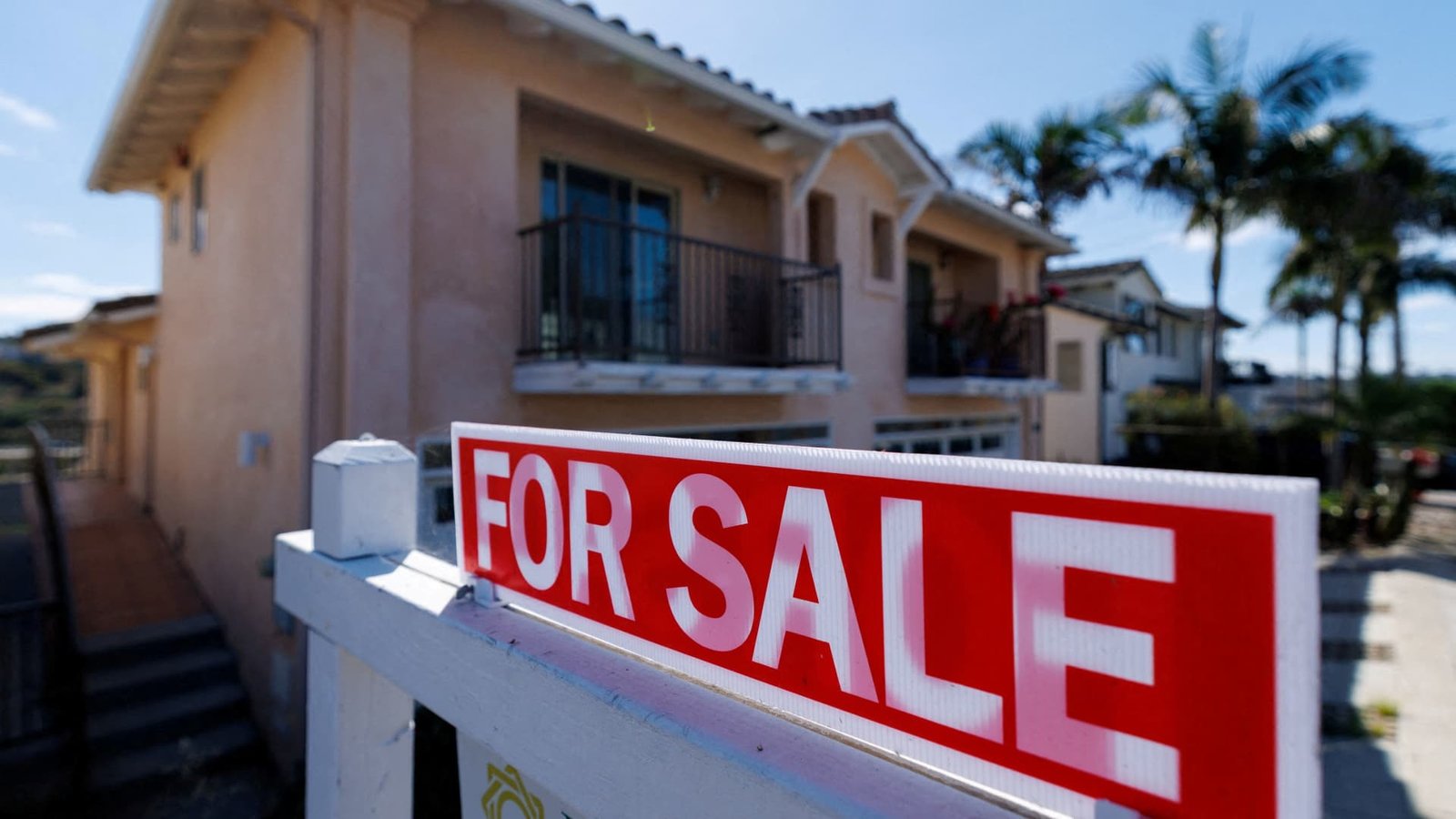
FILE PHOTO: A for sale sign is shown for a residential home in Encinitas, California, U.S. July 25, 2025.
Mike Blake | Reuters
A version of this article first appeared in the CNBC Property Play newsletter with Diana Olick. Property Play covers new and evolving opportunities for the real estate investor, from individuals to venture capitalists, private equity funds, family offices, institutional investors and large public companies. Sign up to receive future editions, straight to your inbox.
The all-important spring housing market is well underway, but expectations are falling short due to the war in Iran and its impact on both the U.S. economy and consumer sentiment.
Mortgage rates, which were previously forecast to be far lower this spring than last, are now much higher, and concerns over employment and inflation are throwing cold water on pent-up homebuyer demand.
Buyers in the first quarter of this year were more concerned about the economy and mortgage rates than they were about home prices, according to real estate agents who participated in the quarterly CNBC Housing Market Survey.
“They’re fearful of the war, they’re fearful of gas prices, [for] their job security,” said Faith Harmer, an agent in the Las Vegas metropolitan area.
The CNBC Housing Market Survey is a national inquiry of real estate agents selected randomly across the United States. Responses for the first-quarter survey were collected between March 24 and March 30. This quarter, 70 agents shared their insights.
When asked about their buyers’ primary concern, about one-third of agents said the economy, while another third said mortgage rates. The latter marked a big jump from just 26% in the fourth quarter.
Only 9% of agents in the first-quarter survey said prices were their buyers’ biggest concern, down from 18% in the previous period.
This should come as no surprise, as the average rate on the 30-year fixed mortgage hit a low of 5.99% the day before the Iran war started and then began to climb. It’s now hovering around 6.5%.
Still, while most agents said prices were either flat or falling, nearly twice as many agents, 29%, reported home prices rising during the first quarter than did in the previous quarter. Price dynamics can vary widely depending on the market and region of the country.
But affordability is not improving as much as most experts had forecast. When asked how affordability was hitting buyers, 19% of agents said it was causing them to get out of the market. That was up from just 11% at the end of last year.
More than half of agents reported at least one contract cancellation.
“Buyers that were on the fence and deciding to buy are now on the fence and going the other direction, saying, ‘I’m not going to buy,'” said Eric Bramlett, an agent in Austin, Texas.
As buyer demand drops, homes are sitting on the market longer. In the first quarter, 31% of agents reported that their listings were on the market for more than six weeks, compared with 26% in the fourth quarter.
“We just had one recently where they wanted what they wanted, and they wouldn’t come down to a price that the market could bear,” Harmer, the agent in Las Vegas, said. “So, in the end, they just pulled it off the market.”
Sellers are now more worried about that wait time. Fully 37% of responding agents said time on the market was their sellers’ top concern, compared with 30% at the end of last year.
That took share from price as sellers’ top concern, falling from nearly half of agents ranking it first to 39%.
Still, fewer agents reported price cuts than the previous quarter, but that may be the result of seasonal dynamics and the impact of lower mortgage rates in the middle of the first quarter, which gave buyers more purchasing power.
That may also be why fewer agents said they had to delist homes compared with the fourth quarter, when agents reported a slower-than-usual fall market with more frustrated sellers.
Even as concerns over the economy and interest rates rise, agents in the first quarter still said the market was either in the buyer’s favor or balanced. The share that called it a buyer’s market did drop quarter to quarter, from 42% to 36%, likely due to those new buyer headwinds – higher mortgage rates, the war and a weaker job market. And sellers are taking note.
“We’ve had two sellers who were planning on listing in May already decide, ‘Let’s hold, let’s search later in the summer for our next home to buy, and then we’ll try and list in the fall,'” said Dana Bull, an agent in the Boston area. “So they originally thought that the spring would be perfect for them, because it just felt like it was going to be the best time, and now they don’t feel as confident, and they want to wait and see.”
Just over half of agents surveyed said they expect the market to improve as the spring goes on, but that share is way down from the end of last year, when there was no war in the picture.
A higher share of agents said they expect the market to stay the same as last quarter, which is significant, given that the market is going from the historically slowest season for housing to the usually busiest.