The Shadow Grid: Big Tech’s Quiet Takeover of America’s Power

AI data centers are forcing hyperscalers to build their own energy infrastructure
On February 28, 2026, the United States and Israel launched Operation Epic Fury: a joint military campaign that struck more than 1,000 Iranian targets in the first 24 hours, killed Supreme Leader Ali Khamenei – and demonstrated that artificial intelligence is now part of the operational backbone of modern warfare.
The AI system most closely linked to U.S. operational support was Claude. Reporting indicates Anthropic‘s model was used through the Pentagon’s Maven Smart System, aided by Palantir (PLTR) in the broader defense-AI stack, to help process imagery, communications, and other intelligence inputs at machine speed. The result was a compressed kill chain: targets were analyzed, prioritized, and acted on faster than traditional human-only workflows could manage.
Five days later, on March 4, the same country staged a very different kind of event.
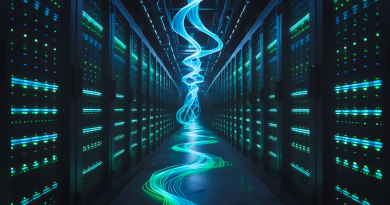
President Trump gathered the CEOs of Alphabet (GOOGL), Microsoft (MSFT), Meta (META), Amazon (AMZN), Oracle (ORCL), xAI, and OpenAI at the White House for a signing ceremony. They signed something called the Ratepayer Protection Pledge – a commitment, the administration said, to keep AI-driven data center expansion from raising household electricity bills by pushing hyperscalers to build, bring, or buy the power and infrastructure they need themselves. Some observers have started calling that emerging system the “shadow grid.”
The press covered both events, and not many people connected them. But they should have…
Because Operation Epic Fury and the Ratepayer Protection Pledge are two chapters of the same story. And together, they may have just changed the investment calculus on energy, infrastructure, and national security more than most investors appreciate.
Why AI Data Centers Need Their Own Power
Start with what the conflict revealed about AI, because it changes the stakes of everything that follows.
The U.S. military used Anthropic’s Claude, through the Maven Smart System, to support intelligence analysis, target identification, and operational simulations during the strikes. In practice, that meant ingesting intelligence inputs, ranking targets, and helping assess strike effects once operations were underway.
In other words, AI is moving beyond the role of productivity tool or chatbot. It is now being used to process battlefields and compress kill chains. In this case, it appears to have helped accelerate the chain of analysis behind one of the most consequential strikes of the decade.
Now ask the question almost every financial analyst is failing to ask: what does that mean for the AI infrastructure build-out?
It means the shadow grid isn’t just a commercial infrastructure story anymore. It’s a national security story. The compute capacity that enables AI is now powering the operational backbone of U.S. military dominance. And the energy that powers that compute is, as of this week, as strategically critical as an aircraft carrier.
Meanwhile, the war is doing something else that directly accelerates the shadow grid thesis.
A Shadow Grid In Overdrive
Iran launched retaliatory missile and drone strikes targeting U.S. embassies, military installations, and oil infrastructure – including vessels in the Strait of Hormuz – throughout the Middle East. The strait is now effectively blocked for normal commercial traffic, and oil prices have surged sharply as markets price in a major supply disruption.
Translation: the global energy system just became less reliable and more expensive precisely when America is trying to power the largest technology buildout in its history. That is a pressure cooker.
And the hyperscalers – who were already planning to build private energy infrastructure before the war – now have an argument that goes far beyond cost management. They have an argument that goes to the survival of the American technological advantage itself.
That brings us back to the public grid – the one your home is connected to.
The Energy Demands of the AI Economy
Power demand from U.S. data centers doubled between 2018 and 2024 and could triple by 2028. There are roughly 680 data centers currently being planned in the United States, collectively requiring the energy equivalent of 186 large nuclear power plants. The public grid was not designed for this. Capacity prices in PJM Interconnection – the largest U.S. power market, spanning 13 states and D.C. – have surged to record highs, with recent auctions clearing around $329 to $333 per megawatt-day. That is a system under mounting strain.
So, what do you do if you’re Microsoft or Google and you need absolute power reliability for a campus consuming as much electricity as a small city – a campus that is now, demonstrably, part of America’s national defense infrastructure?
You don’t wait for the utility to figure it out. You build your own.
Private natural gas plants. Long-term nuclear power purchase agreements. Small modular reactors built directly into the data center footprint. Independent transmission lines, substations, and switching infrastructure.
One grid for the AI economy. One grid for everyone else.
This bifurcation is underway. And the Iran War just turbocharged it.
The AI Infrastructure Buildout
The shadow grid is likely to be the most capital-intensive build-out in the American economy since the interstate highway system. And like the highway system, it doesn’t just benefit the end users. It creates enormous, durable value for everyone supplying the materials, the equipment, the engineering, and the fuel.
But here’s the new layer that Operation Epic Fury adds: Washington is now an explicit partner in ensuring that AI infrastructure gets built. An AI-first military strategy is no longer just a memo or a concept paper; it now has a demonstrated operational dimension, visible in the opening phase of one of the most significant military operations of the decade. The U.S. Department of Defense has formally embraced a blueprint to make AI foundational to how U.S. armed forces fight, gather intelligence, and organize operations across all domains.
When the Pentagon’s warfighting strategy runs on the same compute infrastructure that Microsoft and Google are building, “AI infrastructure” stops being a corporate capex story and becomes a defense appropriations story. The political tailwind doesn’t just include Trump’s Ratepayer Protection Pledge. It includes the entire national security establishment recognizing, in real time, that AI is how America wins wars.
That creates a very different political environment for energy permitting, nuclear licensing, and infrastructure investment than the one that existed just two weeks ago.
The smart money figured this out before the war.
But the shadow grid trade – now supercharged by the national security imperative – still has years of runway, and most investors are still thinking about AI as a software story. They’re wrong. Increasingly, the constraint on AI is physical – power, cooling, land, and the equipment to manage all three.
That’s where the alpha is.
The Companies Building the AI Power Grid
GE Vernova (GEV) may be the single best-positioned large-cap in this trade – gas turbines, grid equipment, and electrification infrastructure under one ticker. Eaton (ETN), Hubbell (HUBB), and Quanta Services (PWR) capture the power infrastructure buildout. Vertiv owns the precision cooling market. These are infrastructure suppliers to a build-out that is now simultaneously supported by corporate capex, White House policy, and Pentagon warfighting strategy.
The Energy Companies Fueling AI
Vistra (VST) and Constellation Energy (CEG) are transitioning from commodity power producers into critical AI infrastructure partners. The Iran War and the Hormuz disruption just made domestic generation assets significantly more valuable relative to import-dependent alternatives. Constellation’s 20-year power purchase agreement with Microsoft is the template. More deals are coming. The repricing of these companies as strategic infrastructure is not complete.
We think nuclear is the most differentiated angle in the entire trade – and the Iran War makes it more urgent, not less. The Hormuz crisis is a direct argument for nuclear: it is the one large-scale generation technology that is completely immune to Middle Eastern oil supply disruptions. No pipelines, tankers, or exposure to any Iranian retaliation against Gulf oil infrastructure. Domestic uranium, domestic fuel cycle, domestic output. Cameco (CCJ) and Uranium Energy Corp (UEC) win regardless of which reactor design prevails. BWX Technologies (BWXT) builds the reactor components and carries defense exposure as a second thesis – a name that just became meaningfully more interesting given the demonstrated role of AI in military operations.
The Overlooked Infrastructure Behind AI Data Centers
Water infrastructure remains almost entirely absent from the AI infrastructure conversation – yet every hyperscale campus is also a water-intensive industrial site. Data centers need water for cooling, heat rejection, fire suppression, treatment, and pressure management – and the larger the campus, the more complex that plumbing and control stack becomes. Xylem (XYL), Watts Water Technologies (WTS), and Mueller Water Products (MWA) are quiet beneficiaries of every shadow grid campus that breaks ground.
And alongside the U.S.-Iran conflict, the Operational Technology (OT) cybersecurity angle just became far more urgent. Iran’s Revolutionary Guard Corps has long been associated with advanced cyber activity, including campaigns aimed at disrupting industrial and operational technology environments. When you are building a private power grid for America’s AI-driven national security infrastructure, protecting that grid from cyber retaliation is not optional. Palo Alto Networks (PANW) and Fortinet (FTNT) both have OT security exposure. This trade just went from interesting to essential.
How the Shadow Grid Threatens Traditional Utilities
Regulated utilities have been the widow-and-orphan trade for over a century. Boring. Dividend-paying. Rate-regulated. Backed by state-guaranteed returns on capital.
The shadow grid breaks that assumption for the highest-value customers in the grid’s history. And the Iran War and Strait of Hormuz disruption break it further – because they create additional pressure to accelerate private, domestic, insulated power infrastructure at the expense of the shared grid.
The stranded asset problem is real and underpriced. When a utility in Virginia or Ohio upgraded its transmission infrastructure to serve a new hyperscale data center campus, it issued bonds, capitalized that investment at a regulated rate of return, and built its next rate case around projected AI load growth. But if the hyperscaler builds its own generation and goes behind-the-meter, the utility spent billions on infrastructure for a customer who is leaving.
That debt doesn’t disappear. It gets passed to ratepayers – aka folks like you and me.
The Defensive Move
For investors, the load growth projections baked into utility valuations in data-center-heavy service territories are increasingly fictional. Dominion Energy (D), Duke Energy (DUK), and American Electric Power (AEP) all have significant data center exposure in their service territories. The market is still pricing them as if that load is sticky.
Add the Iran-driven oil price shock – Brent crude approaching $120, natural gas markets tightening, import-dependent generation costs rising – and the cost structure assumptions for the most exposed utilities get hit from two directions at once. Load-growth assumptions weaken as hyperscalers move behind the meter. Input costs rise as the Middle East crisis tightens global energy markets.
Rotating out of utility sector ETFs – which are heavily weighted toward the most exposed names – is the prudent defensive move for any portfolio that built a utility position on the assumption that AI demand would be a tailwind rather than an exit.
The Bottom Line: The Shadow Grid Is Coming
The shadow grid was always a story about who controls the physical foundations of the next economy.
Operation Epic Fury just made it a story about who controls the physical foundations of the next war.
When the AI that helps locate and eliminate a supreme leader runs on privately built compute powered by privately built energy infrastructure, the shadow grid stops being a corporate moat story and becomes a national power story.
The same infrastructure that gives Microsoft a competitive advantage in enterprise software increasingly gives America a strategic edge over its adversaries.
Washington understands this now. The hyperscalers have known it for years – which is why they were already building before Trump held a signing ceremony – and before the bombs started falling.
The question is no longer whether the shadow grid gets built. It’s whether your portfolio is positioned to benefit from it.
One company sits closer to the center of that AI power race than almost any other: OpenAI.
The same organization that helped ignite the modern AI revolution is now widely expected to pursue a public listing – potentially the most anticipated technology IPO of the decade.
But investors who wait until the day OpenAI rings the opening bell may already be late.
That’s why I recently put together a special briefing explaining a little-known way investors may be able to position themselves before the IPO headlines arrive.
You can see the full breakdown here.